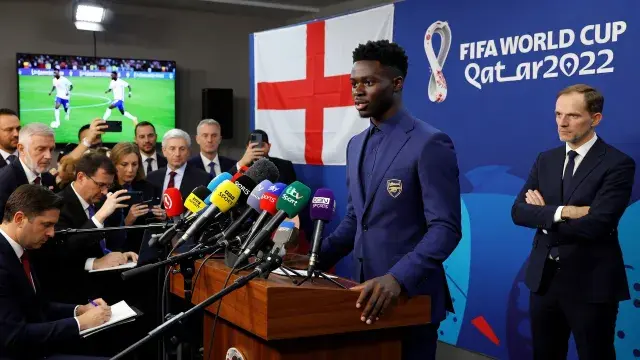
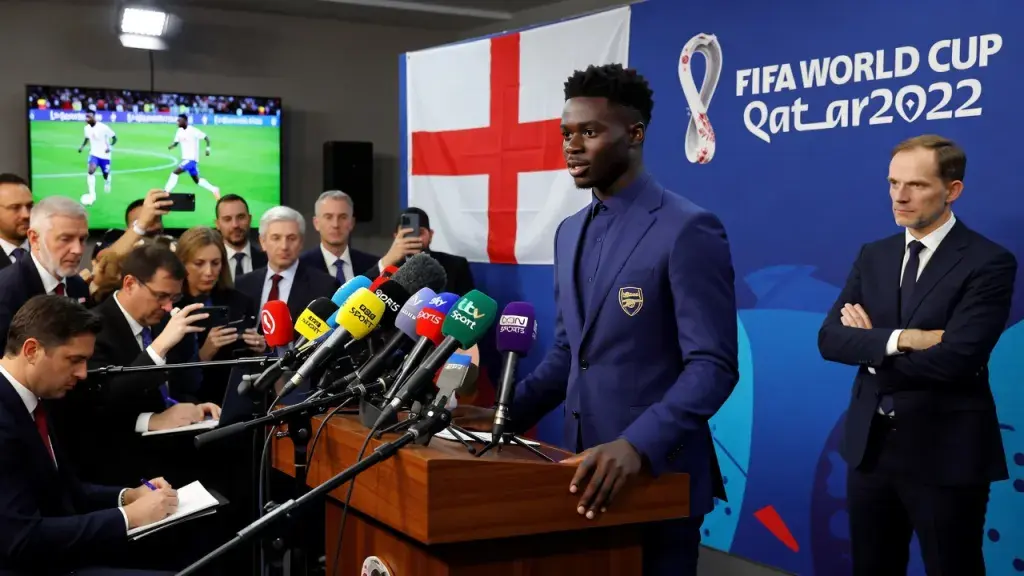
Bukayo Saka has put his hand up to feature in England's FIFA World Cup opener against Croatia, insisting he is willing to "gamble" with his fitness despite ongoing concerns over an Achilles injury that has disrupted much of his recent season. The 23-year-old Arsenal winger spoke with characteristic directness ahead of what would be his 50th international appearance - a milestone that carries extra weight given the physical challenges he has navigated to reach this point.
Saka missed the March international break and seven Arsenal club fixtures due to the Achilles complaint, a spell that drew scrutiny from pundits and supporters alike. His return to action helped Arsenal clinch the Premier League title for the first time in 22 years - a historic achievement that demonstrated just how critical he is to both club and country. His limited involvement in England's final warm-up fixture against Costa Rica, where he managed just 27 minutes, had understandably prompted fresh questions about his readiness, the kind of debate that precedes major tournament football the way antepost betting surrounds the long-range forecasting of big sporting events - everyone speculating, few with the full picture. Thomas Tuchel, in his first major tournament as England manager, will ultimately determine how much Saka features from the outset.
Speaking at a pre-match press conference, Saka was careful not to publicly contradict his manager's decision-making but left little doubt about his personal conviction. "Between Mikel [Arteta] and the Arsenal medical team and Thomas [Tuchel] and the England medical team, since March they have managed me amazingly and helped me get back on the pitch and do what I can for the team," he said. "I'm feeling better than I have felt in the last few months and I'm ready to go." The statement was measured, but the intent behind it was unmistakable.
A Calculated Risk, Not a Reckless One
When pressed on the difficulty of being assessed and judged while carrying a knock, Saka did not retreat into diplomatic non-answers. Instead, he reframed the situation entirely. "At the end of the day people don't really care how you're feeling; they expect you to deliver, they expect you to perform," he said. "I'm happy to take that gamble and it paid off I'd say, and I'm going to continue doing that - but like I said, I'm feeling a lot better than I did in March, and I'm ready to go, so I'm excited." There is a maturity in that acceptance. Saka is not minimising the injury or ignoring the risk; he is acknowledging the terms of high-level sport and choosing to engage with them on his own terms.
The Stakes for England Going Into the Tournament
Croatia represent a well-organised and experienced opening opponent. They are a side with a proven capacity to frustrate higher-ranked teams on the biggest stages, as England themselves know from painful experience. The dynamic and direct nature of Saka's play - his ability to drive at defenders, draw fouls, and create from wide positions - makes him one of England's most effective attacking outlets. His absence or underuse would represent a meaningful tactical reduction in England's options, particularly against a side likely to defend with shape and discipline.
For Tuchel, the decision about Saka's involvement will reflect a broader question of tournament management: how much do you ask of a player who is not fully fit in the opening group fixture, knowing there are further games to come? The answer will tell observers a great deal about how England intend to approach this World Cup - whether they prioritise caution and rotation in the early stages, or back their best players to deliver from the first whistle. Either way, with Saka declaring himself available and eager, the conversation has shifted squarely back to the coaching staff.